TimeCrafting for Teams
A shared language for time.
Workshops where a team leaves with something they built together, not a slide deck they’ll never open again.
Half-day and full-day sessions, in person or virtual, for teams, associations, and organizations that have tried the systems and want a practice that bends with a real week instead of breaking against it.
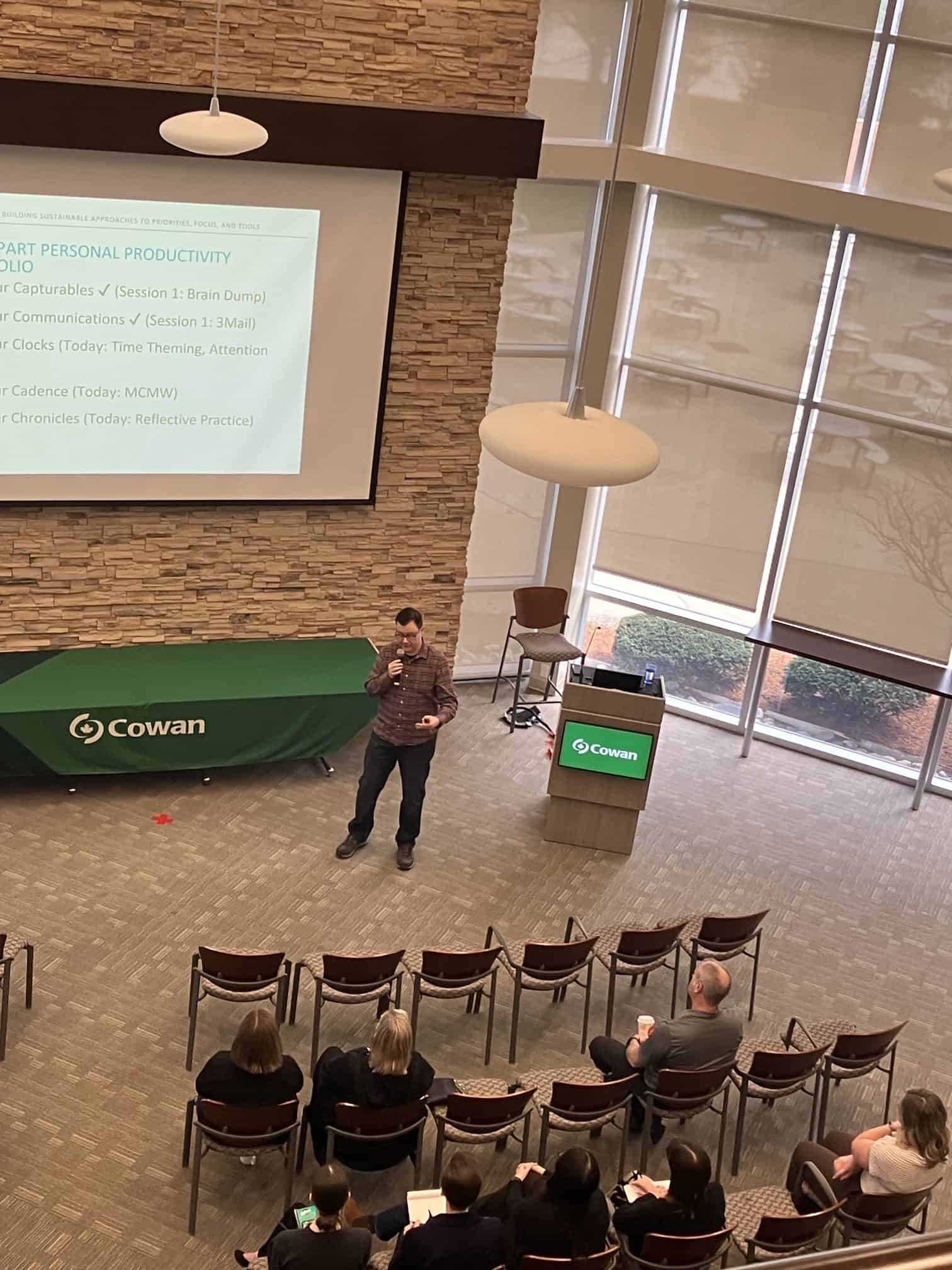
Even when business isn’t personal, productivity always is.
The how, and the why
Every team workshop runs on two layers. Most teams need both; some only need the first to start.
The how · TimeCrafting
The language
Time theming, attention paths, and reflective practice: three elements a team can combine differently depending on what the week is asking of them. Nobody installs a system. Everyone builds a structure that fits their own time, energy, and attention, and the team ends up with words for it.
This is where “I’m in a theme day” and “that’s not a today task” start meaning the same thing to everyone in the room.
The why · Productiveness
The person
Productivity measures what a team produced. Productiveness asks who they were in the producing of it. The second half of a full-day session works through the principles from the book, so the practice has something to stand on when the quarter gets heavy.
What a team leaves with isn’t a productive team. It’s a room of people of productiveness: some forged for the first time, some fostered in a practice they already had.
Two formats
Both are built to be revised for the room. Both run in person or virtual.
The Essentials
One theme structure, one attention path, one reflective habit. Enough to change what a team does on Monday, not so much that nobody does any of it. Works as a standalone session, a conference breakout, or the first half of a longer engagement.
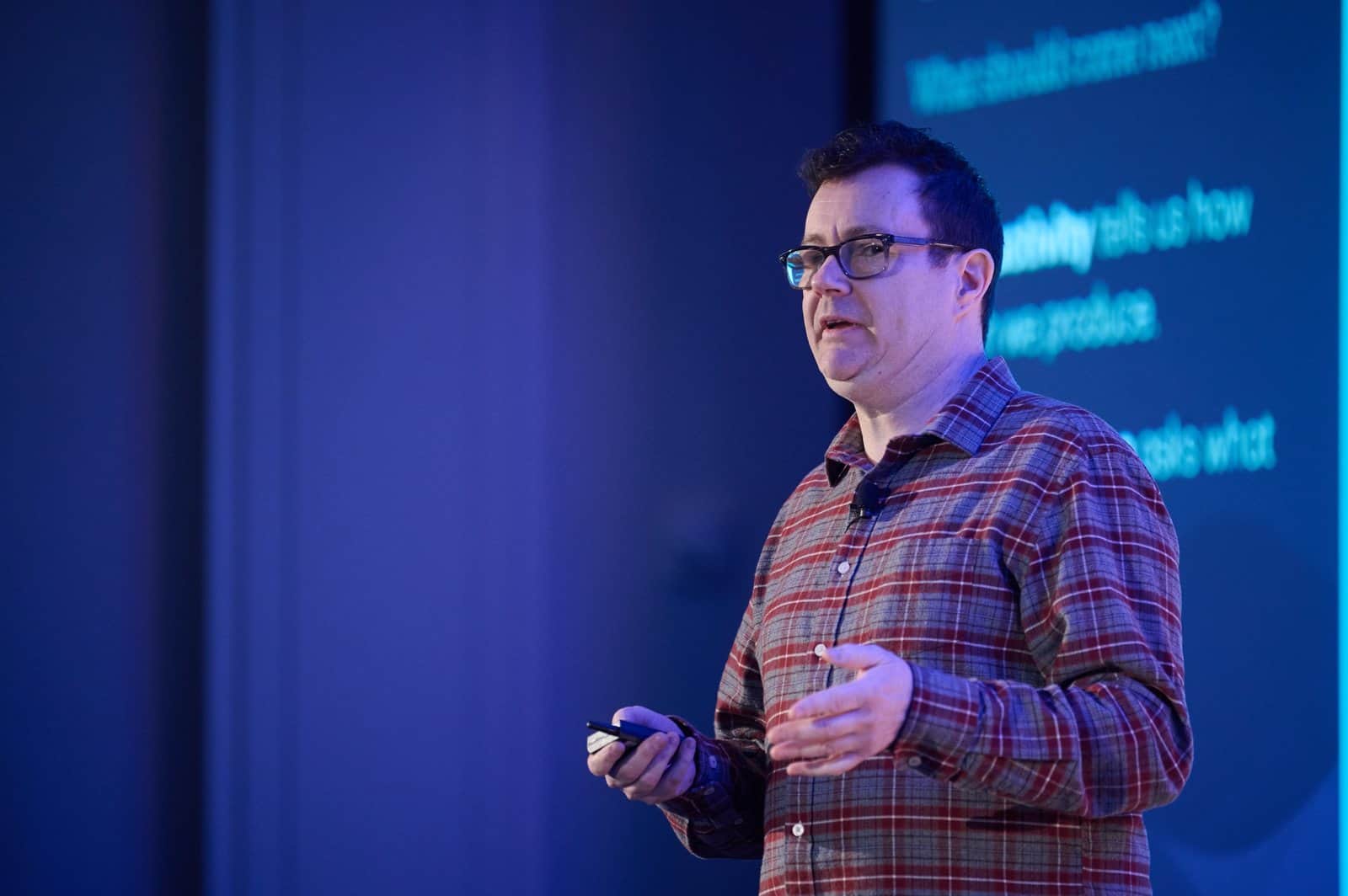
This is the format Cowan ran on a screen in March before bringing me in for the room in April.
The Deep Dive
Five modules with live exercises, built from what the team already uses, on paper or on a screen. The morning is the language; the afternoon is the person. Everyone leaves with a personal TimeCrafting plan written in their own hand, and the team leaves with a way to talk about time that outlasts the day.
Trims to two and a half hours for a tight agenda. Stretches to a full day when a team wants to work on the why properly.
What a team leaves with
- A personal TimeCrafting plan for every participant, built during the session
- The workbook, including the Productiveness ROI tracker for the two weeks after
- A shared vocabulary the team keeps using after I’ve gone
What it asks of you
- A 15-minute call first, so I can build the session for your team and not a generic one.
- A room, or a screen, and the time blocked honestly. A workshop squeezed between two meetings doesn’t hold.
- Permission for people to try things in their own days for two weeks afterward. That’s where the work happens.
What I commit to
- A session built from your team’s actual week, tools, and pressures, not a template with the logo swapped.
- Materials your team keeps, revised when my thinking moves, with the revisions sent to you.
- A check-in two weeks out, so the practice has someone to report back to.
- Telling you plainly if your problem is too much work rather than poorly structured work. Structure makes an overloaded team legible. It doesn’t make the load lighter, and I won’t pretend it does.
In the room, or on the screen
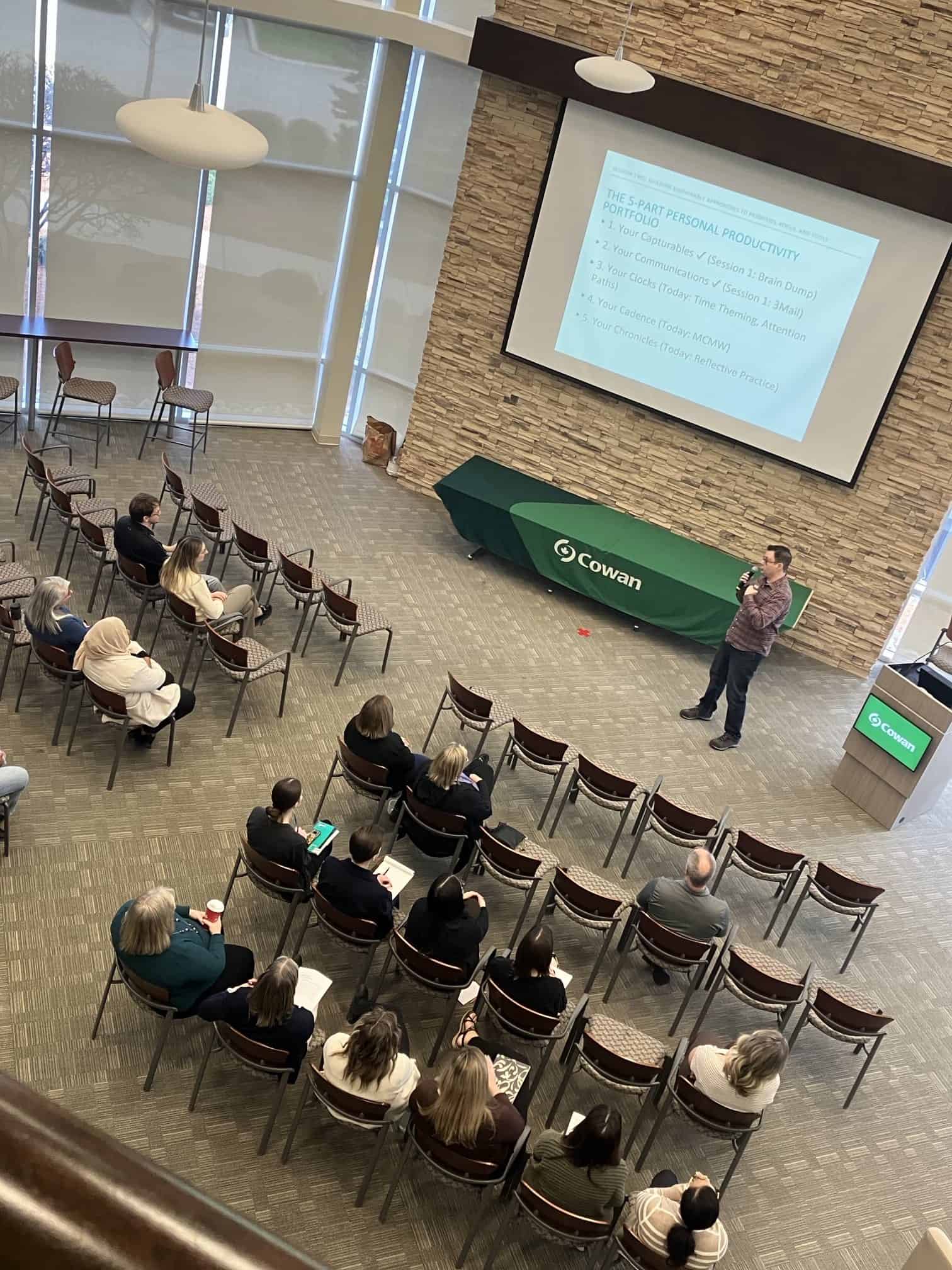
Both formats run in person or virtual, and virtual isn’t the lesser version. Cowan ran the Essentials live on a screen in March, then brought me into the office in April, where a small group sat in the room and the rest of a distributed workforce watched from wherever they were. Google’s sales team and the Canada Revenue Agency both ran theirs fully virtual. The fee is less than in person; what a team saves is the travel, not the session.
Prices, and how I quote them
The Deep Dive isn’t a longer Essentials. It’s more preparation, more contact time, and people leave with something built rather than something heard, so it’s priced as a different thing. Corporate and commercial teams are at the standard rate. Associations are priced to make the booking possible. A few mission-aligned organizations a year are chosen, not discounted. Virtual is less than in person.
Books for the team can be part of any of it: author copies of Productiveness for every participant, bundled with the workbook. Tell me about the team and I’ll send a number, usually within a day. Half on booking, the balance on completion.
What teams say
It gave us a common language and tools to address uncomfortable situations and work together more effectively.
Mike has a remarkable ability to work alongside very busy people, and made sure we understood how to apply the approaches sustainably.
Attendees rated the session 25.14 out of 30. Professional, engaged, and I’d recommend him without hesitation.
Cowan Insurance · 2026 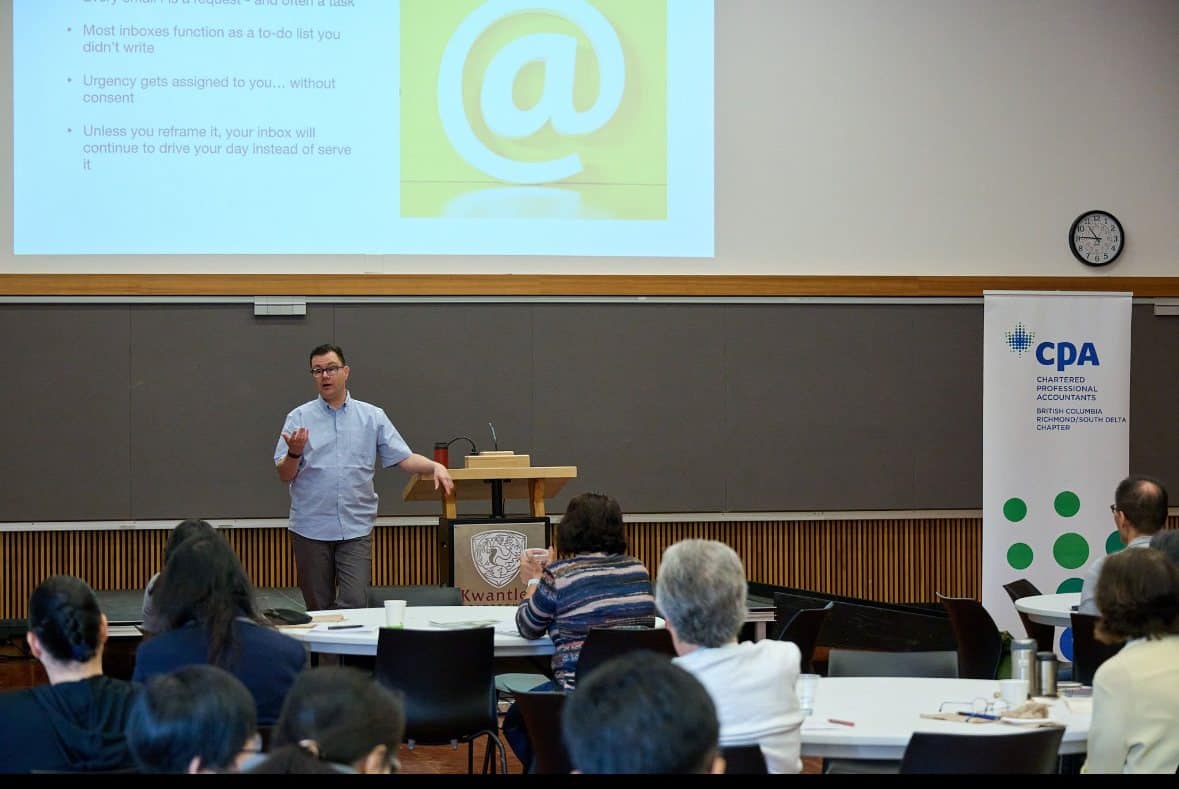
CPA British Columbia · 2024 and 2025 Rising Economy Summit · 2026
This won’t suit every team
- If you want a system installed. There’s no default TimeCrafting setup to roll out. Two people on the same team should end up with visibly different weeks.
- If the workshop is meant to fix a workload problem. It can make the load visible. It can’t make it smaller, and I’ll say so on the call.
- If nobody has time to practice afterward. The session is the start. The two weeks after are the workshop.
Start with a conversation.
Fifteen minutes. Tell me about the team and the season they’re in, and I’ll tell you which format fits and what it costs.